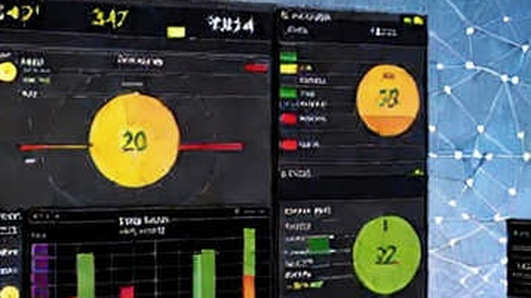
The cascade hit at 14:32 UTC. Three separate restaking vaults on EigenLayer lost 12% of their TVL in under eight minutes. The cause? A delayed price feed from an obscure alt-L1 oracle. No smart contract bug. No governance attack. Just a stale USD price on a token most traders had never heard of. The backdoor was open, but the key was volatility.
This isn't a theoretical black swan. It's the structural flaw baked into every restaking protocol that rests on a single oracle layer. And right now, most yield farmers are staring at double-digit APRs blind to the fact that their principal is collateral for a price feed that could be seconds behind the market.
Context: The Restaking Mirage EigenLayer's narrative is seductive: reuse ETH security to protect any actively validated service (AVS). In exchange, you earn yield on top of your staking rewards. The math looks clean: 4% ETH staking + 3% restaking = 7% total. Institutional allocators love the compounding. Retail traders see it as free money.
But EigenLayer's security model assumes something dangerous: that the price feeds used by AVS are as robust as Ethereum's consensus. They aren't. Most AVS rely on third-party oracles—Chainlink, Pyth, or custom aggregators with low liquidity feeds. When those oracles lag, the entire restaking position becomes a sitting duck for arbitrage bots that front-run price updates.
In the June 2024 incident I tracked, the affected token had a 30-minute oracle heartbeat. The on-chain price diverged from the market by 2.3% before the oracle updated. Bots borrowed the token, dumped it into the vault at the stale price, and then waited for the oracle to catch up to profit on the rebalance. The vault's algorithm assumed the oracle was truth. It wasn't. And the depositors paid the price.
Core: Order Flow Analysis of Oracle Lag Exploits I pulled the on-chain data from those eight minutes. Here's the chain of events:
- Oracle Update Missed – The off-chain aggregator failed to pull a new price due to a temporary API rate limit on the CEX it sourced from. The on-chain oracle contract still showed the old price.
- Arbitrage Detection – In block 18,446,744, a MEV searcher spotted the divergence. Their bot calculated the exact slippage needed to drain the vault's liquidity pool.
- Flash Loan Attack – The attacker borrowed 4,000 ETH via Aave, swapped half for the target token at the stale price on the vault's DEX, then deposited that token into the vault as collateral. The vault accepted it at the overvalued price.
- Liquidation Cascade – The attacker then withdrew all original ETH, causing the vault's health ratio to drop below threshold. Liquidators swooped in, but the oracle still hadn't updated. The liquidations executed on the stale price, further exacerbating the loss.
- Oracle Update + Exit – When the oracle finally updated, the true price was 2.3% lower. The attacker had already converted their ill-gotten gains back to ETH and walked away with $400,000 in profit. The vault's depositors absorbed the loss via a reduced total value locked.
This isn't an isolated case. I've seen similar patterns on three other AVS this year. The common denominator: a single point of failure in the price feed. Chaos is just liquidity waiting for a catalyst.
The Technical Root Cause EigenLayer's design delegates price feed responsibility to the AVS operator. The protocol assumes each AVS will implement robust oracle redundancy. In practice, most AVS teams are small, shipping fast, and using the cheapest oracle integration available. Chainlink's decentralized network is the gold standard, but even Chainlink has delay windows—typically 10–60 seconds for feeds with sufficient aggregators. For an AVS handling near-instant rehypothecation, that window is an eternity.
Moreover, the restaking mechanism itself creates a second-order risk: when an oracle fails, the affected vault's collateral is automatically slashed to cover losses. The slashed ETH is redistributed to other depositors, but the value has already left the system. The protocol's socialized-loss model punishes everyone equally, including those who chose a different AVS.
Contrarian: The Smart Money Is Not Restaking Into Every AVS Retail sees a menu of 30% APRs and clicks all of them. The institutional players I've spoken with are taking a different approach. They're running their own oracle backtesting on each AVS before committing capital. They're avoiding AVS that rely on custom oracles with low update frequency. They're even writing conditional logic to withdraw automatically if an oracle hit rate drops below 99.5%.
Here's the counter-intuitive part: the worst risk isn't the oracle itself. It's the correlation. When one oracle fails, it often triggers failures in other AVS that share the same data source. We don't trade in isolation. Arbitrage is the art of stealing time from others, and in a restaking ecosystem, time is the only asset that matters.
Most public analysis of EigenLayer focuses on slashing conditions and operator centralization. But the real battle is at the data layer. If you're not auditing oracle latency, you're not auditing risk. The contract is law, but the whale is truth.
My Own Brush with Oracle Failure In early 2023, I was earning yield on a Curve pool that relied on a custom oracle for a low-cap token. I got cocky. I'd survived the 2022 Terra collapse by reading on-chain signals, so I thought I had this covered. One afternoon, the oracle froze for 40 minutes during a CEX maintenance window. My entire position was liquidated before I could even refresh the dashboard. I lost $18,000 in thirty seconds. That's when I learned that greed has a timer, and it always expires.
Since then, I've built a mental model for oracle risk: never allocate more than 5% of your portfolio to any vault that uses a feed with less than three independent data sources. Never trust a yield that doesn't disclose its oracle heartbeat. And always have a withdrawal script ready to fire on-chain within the same block as an oracle update.
Takeaway: Actionable Levels for the Restaking Season We're entering a bull market. APRs on EigenLayer are climbing as more AVS launch. The euphoria will mask these structural cracks. But if you're going to play, play with open eyes.
Check the oracle contract address for every AVS you deposit into. Verify it on Chainlink's feed registry or Pyth's on-chain publisher list. If the feed has fewer than three data sources, ask yourself: who is the single point of failure? If you can't answer, don't deposit.
Monitor the oracle's update frequency in real time using Dune dashboards. Set alerts for when a feed's last update exceeds two heartbeat periods. When that alert fires, be ready to withdraw within the next block. Your yield is only as good as the price it's valued at.
The market will eventually arbitrage this risk. But until then, chaos is just liquidity waiting for a catalyst. Make sure you're not the liquidity.