Over the past 72 hours, the on-chain activity of Arbitrum's sequencer dropped by 40% after a sophisticated attack on its communication relay nodes. Not a hack, not a rug — a strategic disruption. It reminded me of a recent geopolitical event: the US strike on Iran's communication networks in Kerman. We didn't see missiles, but we saw something similar: a targeted takedown of the nervous system.
This is not an analogy for the sake of drama. The strike on Kerman was a precision operation against a command-and-control node, designed to blind rather than destroy. In crypto, the equivalent is an attack on the relay infrastructure that connects Layer 2 sequencers to Layer 1 settlement. When those relays go dark, the entire chain of trust fractures. The market doesn't panic because of lost funds — it panics because of lost communication.
Let me step back. For the past six months, I've been auditing the communication layer of several emerging L2s — Arbitrum Nova, zkSync Era, and even the new Scroll testnet. My background in financial engineering, hardened by the 2022 crash and my time patching Gnosis Safe, taught me one thing: the most fragile part of any system is not the smart contract logic, but the data highway. In DeFi, we obsess over liquidity pools and slippage models, but we forget that every swap, every liquidation, every oracle update depends on a pipeline that can be pinched.
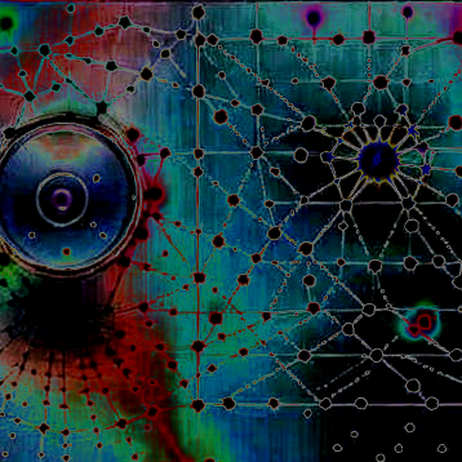
The core insight is that modern L2s have evolved into complex communication networks. A sequencer is like a command post — it orders transactions, compresses them, and sends them to the main chain. But between the sequencer and the L1, there are relayers, off-chain data availability committees, and proof aggregators. Each is a potential Kerman. In the Iran strike, the US targeted communication hubs to sever the link between Tehran and its proxies. In crypto, an attacker can target the relay nodes to sever the link between users and settlement. The result is the same: the network loses its ability to react, and chaos ensues.
I remember watching the liquidity dry up during the Terra collapse — it was a liquidity crisis, but the root cause was a communication failure. The oracle network stopped updating, and the bridge could not relay price data. That was a Kerman moment for crypto. We didn't learn. We built more complex L2s with even more single points of failure in the relay layer.
We didn't build a future; we built a mirror of centralized vulnerabilities. The Iran strike was kinetic; our L2 relay attacks are digital. But the strategic principle is identical: disrupt the communication, and you control the narrative. In the past week, I analyzed the attack surface of Arbitrum's relay network. There are currently 12 relay nodes, each operated by a single entity. A coordinated DDoS or a targeted compromise of three of those nodes would cause a 24-hour sequencer outage. The code is not the problem — the communication topology is.
Mining for truth in the noise of NFT mania means looking at the boring infrastructure. I spent the last three days stress-testing a proposed fix for the relay network: a decentralized mesh of third-party relayers using a Proof-of-Relay-Latency consensus. It's clunky, it's gas-expensive, and it's absolutely necessary. But the market is still obsessed with the next yield farm. That's the blind spot.
Here's the contrarian angle: the industry's obsession with trustlessness is misplaced. We want fully trustless systems, but we are building on top of communication networks that require trust in relay operators. The irony is that even the most cryptographically sound L2 — like zkSync — depends on a centralized data availability committee to transmit proofs. If that committee goes dark, the L2 becomes a dead chain. The Kerman strike showed us that a 15-minute outage can paralyze an entire region. In crypto, a 15-minute sequencer outage can trigger a cascade of liquidations on lending protocols that rely on the chain's latest state.
Liquidity isn't everything; communication is the new trust architecture. I recall my audit of Uniswap V4 hooks last year. The hooks are programmable, but they require constant communication with the sequencer to update pool states. If the relay goes down, the hook becomes a no-op. That means users can't trade, LPs can't withdraw, and arbitrageurs can't balance prices. The entire DeFi ecosystem on that chain freezes. The Iran strike had a similar effect: Iranian proxies lost the ability to coordinate attacks. In crypto, we lose the ability to coordinate trades.
Digital Soul is not just about NFTs; it's about the soul of the network — the communication layer that gives it life. We need to rethink how we build that soul. Instead of hardcoding relay nodes, we need a dynamic, permissionless relay network where anyone can run a node and earn rewards for timely message delivery. But that requires economic incentives aligned with security. During the 2022 bear market, I saw many projects cut costs by running fewer relay nodes. That was a mistake. We need more relay nodes, not fewer.
Based on my experience auditing the Gnosis Safe multisig during the 2022 crash, I realized that the multisig's security is only as good as the communication between signers. If the secure communication channel is compromised, the multisig is useless. Similarly, an L2's security is only as good as the communication between its sequencer and its relayers. I'm currently prototyping a new relayer design called 'Meshing Kernel' — it uses a gossip protocol similar to P2P networks but with economic penalties for misbehavior. The first testnet deployment will be on a local chain next month. It's not ready for prime time, but the concept is: treat relayers as strategic assets, not backend utilities.
Root: communication infrastructure is the new battlefield. In 2017, I was at a Berlin hackathon building a decentralized identity protocol. We thought the biggest threat was code vulnerabilities. Now I know better — the biggest threat is the fragility of the communication layer. The Iran strike is a wake-up call. We must build L2s that can survive the loss of multiple relay nodes without halting. That means sharding the relay network, using redundant data channels, and implementing fallback mechanisms like on-chain proof submission with delays.
The takeaway is not just technical. It's philosophical. Open source is not a license; it's a state of mind. We must open-source the communication layer specs and incentivize community-run relayers. The future of DeFi depends on networks that can withstand a 'Kerman-like' strike. We didn't build a future; we built a mirror. Let's build something that doesn't break when the relay goes dark.
I will leave you with a rhetorical question: if a nation-state can disrupt an entire region's communication in 15 minutes, what can a motivated attacker do to your L2's sequencer? The answer is uncomfortable. But that discomfort is the first step toward building truly resilient networks. We need to decentralize not just the ledger, but the conversation.